Prepared By:
Dr. Deborah Russell
Chief of Education Partnerships
Education Partnerships and Business Development
A New Reality for K–12 Workforce Planning
Across the United States, K–12 school districts continue to face persistent teacher shortages, particularly in STEM, special education, and dual-language programs.
At the same time, recent changes to immigration policy have significantly increased the financial burden of sponsoring international educators through the H-1B visa.
For many districts, especially rural systems and those operating under tight funding constraints, the traditional H-1B pathway is becoming economically impractical.
As a result, HR leaders are taking a closer look at alternative visa pathways that balance compliance, cost efficiency, and classroom continuity.
One option gaining renewed attention is the J-1 visa, a program specifically designed to promote cultural exchange in educational settings while addressing workforce gaps.
The H-1B Cost Challenge for School HR
A September 2025 Presidential Proclamation has fundamentally altered the recruitment landscape by introducing a $100,000 supplemental fee for many H-1B petitions. This “tariff on entry” forces school districts to move beyond traditional budgeting and reassess their entire global talent strategy.
Mission-Critical Challenges for Districts:
- Prohibitive Costs: The new six-figure surcharge can make hiring a single STEM or Special Education teacher cost-prohibitive.
- Operational “Dead Zones”: The H-1B lottery often delays starts until October, missing the beginning of the school year. This high-cost, high-risk vacancy is increasingly difficult to justify to Boards.
- Administrative Strain: Complex documentation and “National Interest Exception” filings stretch lean HR teams beyond capacity.
The Sustainable Alternative:
The J-1 Exchange Visitor Program provides a cost-effective, year-round pipeline. With no lottery caps and significantly lower entry costs, it allows districts to fill gaps dynamically without the six-figure financial risk.
TEACHER LOUNGE TIP
Compare the total investment of H-1B vs. J-1 placements. When factoring in the $100,000 fee risk and lotteryuncertainty, the J-1 program offers a more defensible budgetnarrative and ensures teachers are in classrooms by Day 1.

What the J-1 Visa Offers Educators and Districts
By contrast, the J-1 exchange visitor program was designed with education and cultural exchange at its core.
For school districts, it offers several key advantages:
Lower and More Predictable Costs
J-1 sponsorship and associated administrative fees are nowsignificantly less and transparent than H-1B costs. Because many government fees are managed through the designated sponsor and the visa applicant’s own process, districts are not required to shoulderemployer-mandated filing expenses seen in the H-1B pathway.
Designed for Educational Exchange
The J-1 program explicitly supports teaching placements in U.S.schools. It facilitates international educators joining districts not only toteach, but to engage in meaningful cultural exchange, enriching students, staff, and the wider school community.
Streamlined Compliance Through Sponsorship
Experienced J-1 sponsors guide districts through regulatory requirements, program oversight, and documentation. This reduces internal administrative pressure while maintaining full compliance with federal program rules.
Importantly, the J-1 visa is a non-immigrant exchange visa, notan employment-based permanent residency pathway. Itspurpose is professional exchange and cross-cultural learning,making it particularly aligned with the mission of K–12education.
Strategic Value of The J-1 Visa in Today’s Workforce Environment
Faster, More Flexible Recruitment
Unlike the H-1B lottery system, J-1 placements are not subject to the same annual cap constraints. This allows districts to respond more dynamically to staffing gaps.
Broader Global Talent Access
The J-1 program enables districts to recruit qualified educatorsfrom around the world. This is especially valuable for:
- Dual-language immersion programs
- Multilingual learner support
- International studies curricula
- Culturally diverse communities
Students benefit from global perspectives, and schools strengthen their commitment to inclusive, globally minded education.
A Reliable Pipeline During Shortages
With teacher shortages affecting both urban and rural districts, J-1 programs can provide a dependable pipeline of credentialed educators prepared to contribute immediately in the classroom.
TEACHER LOUNGE TIP
Since J-1 visas aren’t tied to the H-1B lottery, keep your recruitment portal open year-round to fill mid-year vacancieswith top global talent instantly.
Addressing Common HR Concerns
As with any workforce strategy, thoughtful planning is essential.
Term Limits
While temporary, these placements can be strategically integrated into workforce planning cycles, leadership development, and succession pipelines.
Permanent Residency Questions
The J-1 visa does not lead to permanent residency. It is a non-immigrant visa intended for exchange purposes. However, districts can:
- Plan around contract timelines
- Develop mentorship and leadership pathways during placement
- Build long-term global recruitment partnerships
With thoughtful forecasting, districts can leverage J-1 educators as part of a structured multi-year staffing strategy rather than a short-term fix.
TEACHER LOUNGE TIP
Districts that map contract timelines, mentorship milestones, and succession planning from day one treat J-1 placements aspart of a rolling workforce cycle. With structured oversight, time-bound placements become predictable, renewable talent pipelines rather than temporary gaps.

How School HR Leaders Can Move Forward
For HR directors considering international recruitment options, practical next steps include:
- Partner with an experienced J-1 sponsor, such as Teacher Lounge, to ensure program compliance and structured support.
- Model the financial comparison between projected H-1B and J-1 costs specific to your district’s hiring needs.
- Engage finance and legal teams early to align on program expectations, timelines, and oversight.
- Integrate cultural exchange objectives into district planning to maximize educational impact.
Teacher Lounge works with districts not simply as a staffing intermediary, but as a program partner, supporting recruitment, visa compliance, and the broader cultural exchange mission that definesthe J-1 framework.
TEACHER LOUNGE TIP
Before launching, appoint a single internal “International Program Lead” within HR or Talent. Districts that centralize ownership see smoother onboarding, stronger educator retention, and fewer compliance issues, becausecommunication with partners like Teacher Lounge stays streamlined, documentation stays organised, and cultural exchange goals don’t get lost between departments.
Structure drives success as much as visa selection does.
Beyond the Desk
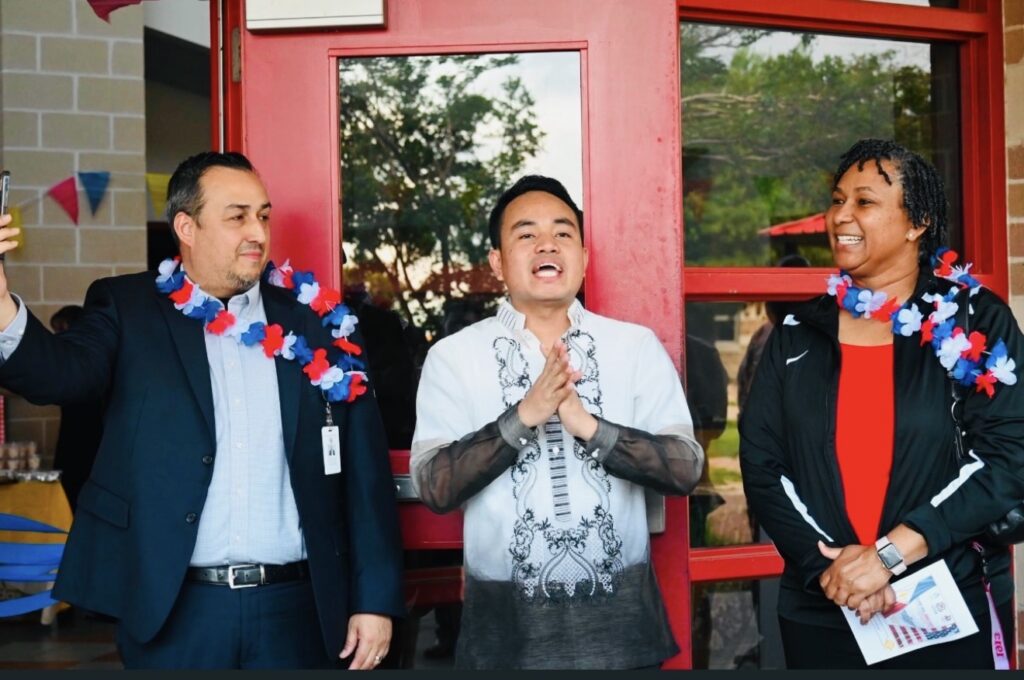
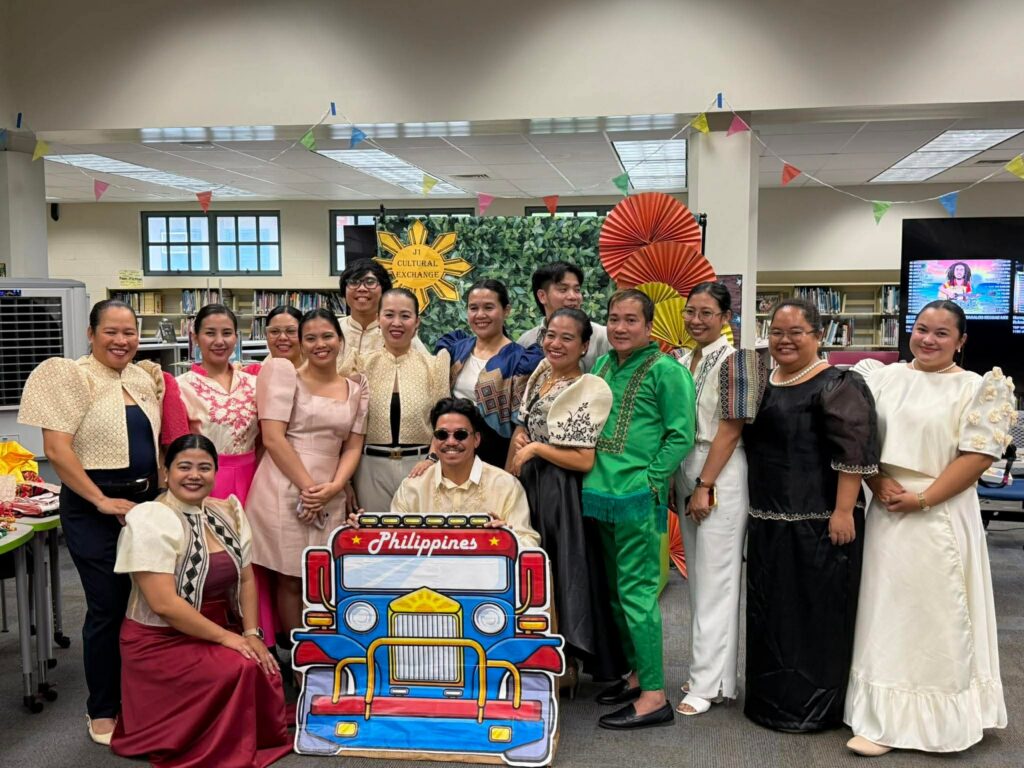
When an international educator enters a school, they aren’t just filling a vacancy, they are opening a window to the world for their students and colleagues. While HR focuses on the logistical advantages of the J-1 program, the trueimpact is felt in the staff room and the classroom:
A “Culture Changer”:
International teachers bring fresh instructional strategies, like play-based learning or global problem-solving, that can re-energise a department.
Authentic Connections:
Students in dual-language or STEM programs gain firsthand exposure to different cultures and accents, building the empathy and global competence they need for a multicultural workforce.
A Supportive Staff Culture:
For domestic teachers, collaborating with J-1 peers offers organic “professional development” through the exchange of diverse classroom management styles and global perspectives.
TEACHER LOUNGE TIP
Integrating into a U.S. school can be a “leap of faith” involvingculture shock and a complex licensing labyrinth. Set up amentorship buddy to help them navigate classroom management norms and local life.
A well-supported teacher is far more likely to stay and thrive for the full five-year program maximum.
Ready to Explore Your Districts Options?
In today’s regulatory and economic climate, school districts mustbe both fiscally responsible and academically ambitious. Rising H-1B costs have prompted necessary reassessment.
The J-1 exchange program, once viewed primarily as a short-term solution, now stands out as a strategic, cost-conscious, and mission-aligned pathway for bringing qualified international educators into U.S. classrooms.
For HR leaders willing to rethink traditional models, the opportunity is clear: balance financial stewardship with global engagement, and transform teacher recruitment into a strategic advantage.
For more information on how your school or district can benefit from the J-1 Teacher program, contact our team for a free consultation here.